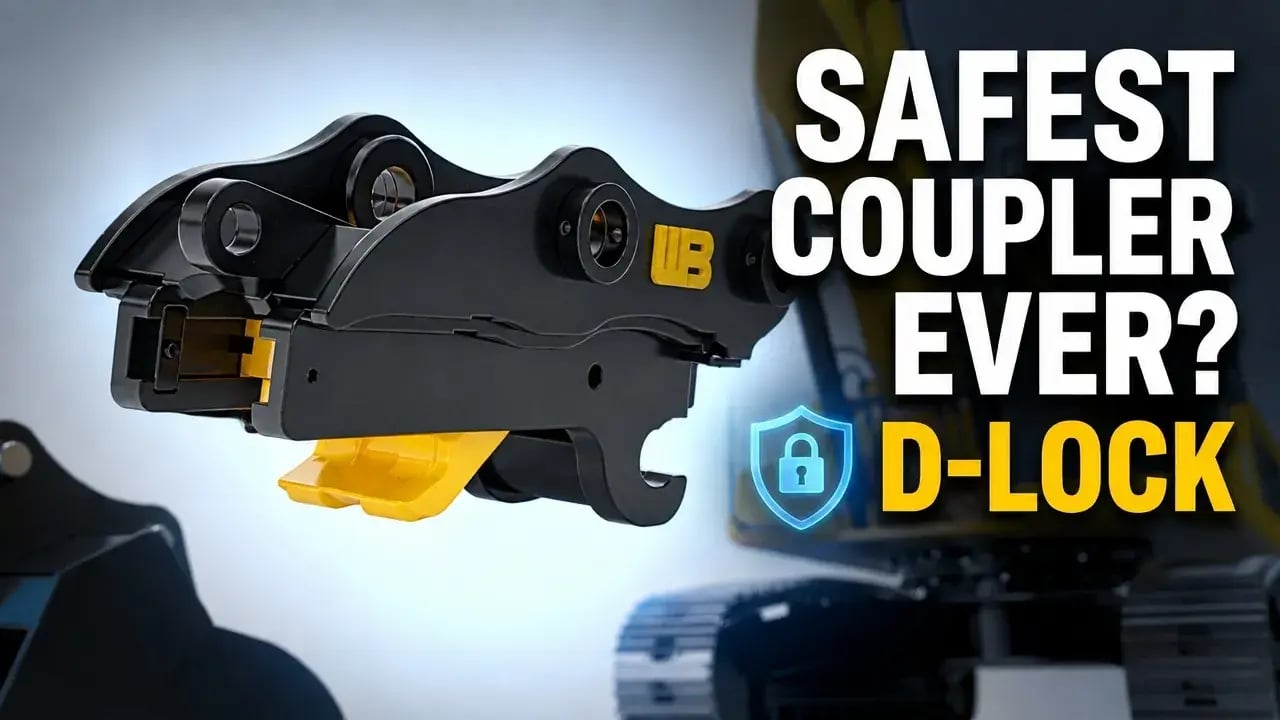
This is an overview of the Werk‑Brau D‑Lock Variable Center multi‑pin grab hydraulic excavator coupler. A quick coupler built around operation + safety so operators can swap attachments fast while keeping the lock-up secure.
The D‑Lock Variable Center Hydraulic Coupler is designed for speed, safety, and versatility when changing attachments, using a variable center / multi‑pin pickup range so one coupler can pick up attachments in the same weight class with the same pin diameter.
What Makes the D‑Lock Different?
- Multi‑Pin Centers / Variable Center pickup for true versatility across attachments
- Dual Pin Lock that locks both pins even if engagement force is lost
- Compact, grease‑free design built to keep productivity high and downtime low
- Only nine moving parts and only two hoses with no complicated operating sequence
If you’re searching for: hydraulic excavator coupler, hydraulic quick coupler, variable center coupler, pin grabber coupler, multi‑pin grab coupler, excavator quick hitch, or Werk‑Brau D‑Lock, this video is the overview you want.
TRANSCRIPT:
Introducing the Werk-Brau D-Lock Coupler, setting the standard in fully automatic quick couplers. The D-Lock incorporates Werk-Brau’s patented dual pin locking system. DPL plus. The DPL plus safety system ensures both the front and rear pins are locked to prevent attachments from swinging on the front pin in the event of loss of engagement force. Other key features include
The primary jaw safety lock is backed up by an independent heavy duty compression spring. The front lock automatically engages the moment the rear jaw is activated, negating any chance of the bucket falling off if the operator misses the rear pin, the jaw lock pulls a spring bias to the lock position and can only be retracted by deliberate activation of the cylinder.
The ability to pick up multiple pin centers in the same weight class, and jaw pin diameters on a 140 class and above. The unlock process is designed to release only when the operator intends to do so in a controlled and safe manner. A highly visible front lock indicator. The safety system does not rely on gravity. Its compact design improves machine performance.
Additional features. The basic weld mat has been re-engineered to provide additional strength and increase in the cylinder size on 240 and above models to match the power of today's machines. Mechanical jaw stop has been added. A pressure relief valve has been included on 14 tone and above models to provide protection from hydraulic pressure spikes, which can cause damage to the cylinder.
We've added a new tertiary lock in addition to the front and rear lock for added safety. The lifting eye is offset to one side to avoid any obstacles, and is also built into the side plate at the coupler frame for structural integrity and added strength. The DH coupler range is designed to comply with global safety standards and all major contractor policies.
How it works. The locking process of the D-Lock coupler is very simple. To attach place the coupler in the curled, crowded position and ensure the jaw is fully retracted before attempting to engage the bucket. Place the coupler above the attachment. Curl the coupler to engage the front pin, and continue to curl the coupler until the attachment is lifted off the ground.
Fully curl the bucket, flick the switch to engage, and hold the bucket crowd lever for approximately 3 to 5 seconds to allow the jaw to fully engage the rear attachment pin. To release fully extend the bucket crowd cylinder, flick the switch and hold the bucket crowd lever for approximately 3 to 5 seconds to allow the jaw to fully retract.
Lower the attachment to the ground and slowly curl the coupler back to release both pins. It's simple design and world leading safety features make the D-Lock one of the most reliable, safe, cost effective, and user friendly couplers on the global market today. When safety is paramount, demand the D-Lock coupler.