
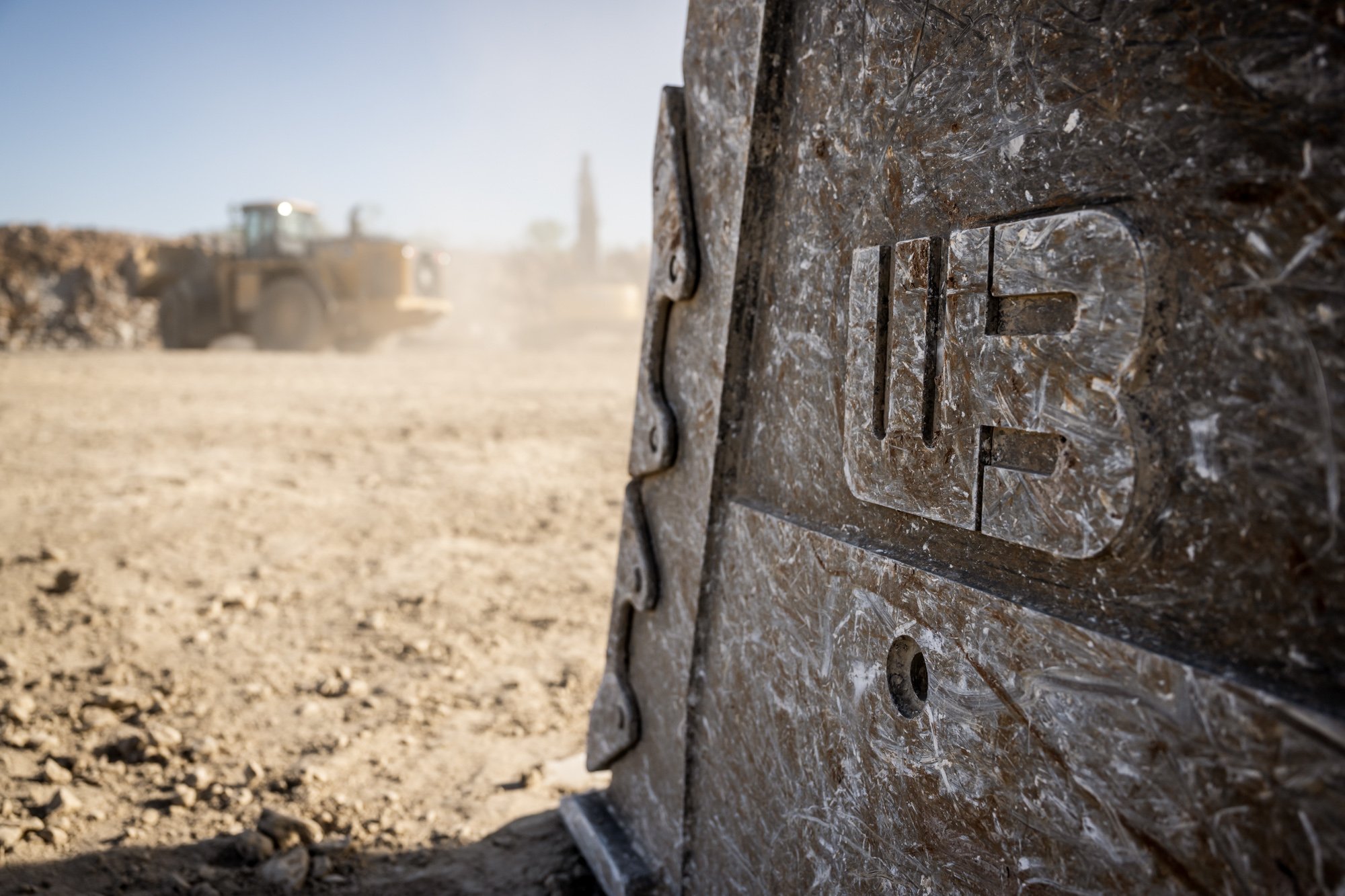
The phone call always starts the same way: “Mike, we need a new bucket ASAP. Ours is shot.”
When I arrive at the jobsite as Werk-Brau’s Regional Account Manager, I often find a bucket that could have been saved with $800 in wear parts three months ago. Instead, the operator waited until the cutting edge wore through to the bucket shell, the side cutters disappeared entirely, and now they are looking at a $15,000 replacement.
This scenario plays out every week across construction sites, demolition jobs, and quarries. The frustrating part? It’s completely preventable.
Whether you are an operator trying to keep your machine productive, a contractor managing equipment costs, or a dealer helping customers make smart decisions, understanding when to replace wear parts versus buying a new bucket can save thousands of dollars and prevent costly downtime.
Here’s the honest assessment process we use at Werk-Brau – including when we’ll tell you that wear parts won’t cut it and you really do need a new bucket.
What Are The Two Biggest Mistakes Costing You Money?
Problem #1: Waiting Too Long to Replace Wear Parts
The most expensive mistake I see happens gradually, then all at once. An operator notices the cutting edge getting thin but figures they can squeeze another week out of it. That week turns into a month. The cutting-edge wears past the bolt holes, exposing the bucket shell to direct contact with rock, concrete, or whatever you are working in.
Here’s what happens next: The bucket shell starts wearing. Once that shell begins taking a beating, you’re not just looking at wear part replacement anymore. You’re looking at structural repairs or complete bucket replacement.
We recently visited a demolition contractor in Ohio who learned this lesson the hard way. Their operator pushed a bucket weeks past replacement time during a demolition project. The cutting edge wore completely through, and the concrete and rebar tore into the bucket shell. What should have been a $400 cutting edge replacement became a $12,000 bucket replacement, plus multiple days of downtime while they sourced a new bucket.
The timeline is ruthless: Once your cutting edge hits 70-75% of its original thickness, you typically have a limited number of operating hours before you risk shell damage. In demolition work, that window shrinks to a week or less because of the impact forces involved.
Problem #2: Wrong Application Usage
The second costly mistake is the “one bucket for everything” mentality. I see heavy duty buckets being used for quarry work, demolition buckets digging in soft clay, and trenching buckets used like a hammer trying to break concrete.
 Each application creates different wear patterns:
- Rock and quarry work creates uniform abrasion across all surfaces
- Demolition debris causes impact damage and irregular wear on corners and edges
- Concrete and asphalt combine abrasion with impact, accelerating wear on teeth and cutting edges
A contractor in Tennessee called us about premature bucket failure after just six months. When we inspected their operation, we found they were using a heavy-duty construction bucket with standard cutting teeth digging through limestone in Nashville. The bucket wasn’t designed for continuous abrasive contact with rock. The bucket wear surfaces wore significantly faster than it should have, and the side cutters were nearly gone.
We switched them to a severe duty bucket with high abrasion resistant steel in critical areas. Same operation, same operator – but the new bucket lasted much longer than before.
The Professional Measurement System
Visual estimates don’t work when thousands of dollars are on the line. You need precise measurements and systematic documentation. Here’s the measurement system I recommend to all our customers:
Essential Tools
Calipers: Get a good set of digital calipers that can measure in both inches and millimeters. The $30 Harbor Freight set works fine – you don’t need precision machinist tools for this job.
Maintenance log: A simple notebook works just fine. But something that will be easily trackable and preferably stay with the machine that is working. Larger contractors have apps that they are already tracking daily inspections on. This should be part of that routine.
Flashlights and magnifiers: You need to see weld integrity, stress cracks, and wear patterns in detail. A good LED flashlight and a basic magnifying glass will reveal problems before they become failures.
Why visual estimates fail: I’ve watched experienced operators look at a cutting edge and estimate it has “plenty of life left” when caliper measurements showed it was already at replacement threshold. Your eyes adapt to gradual wear – measurements don’t lie.
What to Measure
Cutting edge thickness: Measure at three points – center and both ends. New cutting edges typically start at 1” to 2” thick depending on bucket size. Replace when below 70% thickness to prevent shell damage.
Side cutter wear patterns: Measure both height and thickness. Side cutters protect the bucket sides from wear and should extend at least 1-2 inches beyond the bucket shell when new. Replace before their flush with the shell.
Tooth wear: Measure both length and diameter at the shank. Teeth should be replaced when they’ve lost 40% of their original length or when the shank diameter has worn enough to create loose connections or the tooth becomes blunt. Often teeth will have an indicator or mark that once the tooth wears to that point the tooth needs to be replaced. You want to make sure you are not wearing the shank at any point.
Weld integrity points: Check all attachment points for cracks, especially around high-stress areas like tooth adapters, bucket corners and around the bucket ears. Use your magnifying glass – small cracks become big problems fast.
Structural wear indicators: Look for wear on the bucket shell itself, particularly around the cutting edge area and heel of the bucket. Any shell wear deeper than 1/4” needs professional assessment.
When Does Wear Parts Make Sense vs. New Bucket?
This is where I give you the honest answer that some dealers won’t: sometimes wear parts are the smart choice, and sometimes you really do need a new bucket.
Replace Wear Parts When:
Bucket structure remains sound: No cracks in welds, no or limited wear on the shell itself, and all attachment points are solid. If the “bones” of the bucket are good, wear parts will restore full functionality.
Welds show no cracking: Use your magnifying glass and flashlight. Solid welds mean the bucket can handle the stress of new wear parts and continued operation.
Cost-benefit analysis favors parts: A wear part kit typically runs $800-$2,000 depending on bucket size. If the bucket structure is sound and you expect 1,000+ hours of service life, parts make financial sense.
Buy New Bucket When:
Structural damage beyond economical repair: Shell wear deeper than 1/4”, multiple weld cracks, or deformation from impact damage. Repair costs exceed 40-50% of new bucket cost.
Repeated application misuse has weakened bucket: If you’ve been running a construction bucket in quarry conditions, the entire structure may be compromised even if it looks okay. Stress fatigue is cumulative.
Production demands exceed repair downtime: Sometimes the math isn’t just about money – it’s about schedule. If you can’t afford multiple days down for repairs during a critical project phase, buy new.
Why Do Werk-Brau Buckets Last Longer?
After 75+ years of manufacturing excavator attachments, we’ve learned that bucket longevity starts with design, not just materials.
FEA testing for optimal strength design: We use Finite Element Analysis to identify stress concentration points before we build the bucket. This allows us to reinforce critical areas and eliminate weak points that cause premature failure.
High abrasion resistant steel in critical wear areas: We don’t just use harder steel everywhere – we use it strategically. Areas that see sliding contact get abrasion resistant steel. Impact points get impact-resistant steel. This targeted approach extends service life where it matters most.
Increased lip thickness specifications: Our cutting-edge mounting area is typically 10-15% thicker than standard buckets. This means you can wear through more cutting edges before risking shell damage.
Larger tooth configurations: Bigger teeth distribute impact forces over larger areas, reducing stress concentration. They also provide more material to wear away, extending replacement intervals.
Application-Specific Design
We don’t believe in “one size fits all” bucket design. A demolition bucket needs reinforcement in different areas than a trenching bucket. A quarry bucket needs different steel specifications than a general construction bucket.
Creating Your Measurement Protocol
Consistency is key to catching wear before it becomes damage. Here’s the systematic approach that prevents those $15,000 mistakes:
Weekly Inspection Routine
Monday morning measurement: Start each week by measuring cutting edge thickness at center and both ends. Record measurements in your log with date, hours, and current job conditions.
Visual inspection: Check for loose teeth, cracked welds, and unusual wear patterns. Take photos of problem areas – pictures help track progression over time.
Its important to clean the bucket periodically so that you can actually see whats going on. I think dirt and caked mud often hide whats going on underneath. If you don’t clean it off to inspect you might miss something critical.
Red flag indicators: Cutting edge below 60% thickness, any visible weld cracks, teeth loose in adapters, or side cutters wearing unevenly. These conditions require immediate attention.
When to call for professional assessment: If you see structural damage, unusual wear patterns, or if your measurements show rapid wear acceleration, get expert evaluation before continuing operation.
The Bottom Line: Smart Decisions Save Money
Here’s what 10 years in the equipment business has taught me: the best maintenance program combines systematic measurement with honest assessment. Measure consistently, replace parts at proper intervals, match buckets to applications, and don’t be afraid to ask for professional evaluation when you’re unsure.
At Werk-Brau, we’ve built our reputation on giving customers honest assessments rather than just pushing sales. Sometimes that means selling wear parts instead of new buckets. Sometimes it means recommending a competitor’s bucket that better fits a specific application.
But here’s what I’ve learned: customers remember who gave them the right advice, not necessarily who made the sale. That approach has built relationships that have last decades.
If you feel you need a new bucket today, call us at 1-800-537-9561. We’ll give you an honest assessment of whether you really do. Sometimes the answer is yes – your bucket is beyond economical repair and you need replacement immediately. Sometimes the answer is replacing wear parts and proper measurement going forward. Either way, we’ll give you the straight answer that serves your operation’s best interests.
Because at the end of the day, your success is our success. And success in the excavation business starts with making smart decisions about when to repair and when to replace.
Mike Noward is a Marketing Manager at Werk-Brau with over 10 years of experience helping contractors, dealers and operators maximize their excavator attachment performance. For bucket assessment or application-specific recommendations, contact our dedicated team at sales@werk-brau.com or visit www.werk-brau.com.*
Topics:
