
At a Glance:
Wheel loader bucket pricing can vary significantly depending on size, application, materials, build quality, compatibility, and market conditions. While smaller general purpose buckets may be more affordable, larger heavy-duty or specialty designs typically cost more due to added reinforcement, wear protection, and engineering complexity. This blog breaks down common price ranges and the main factors that influence cost so buyers can better understand what they are paying for. Ultimately, the best value comes from choosing a bucket that is properly matched to the machine, material, and demands of the job—not simply the lowest upfront price.
Over the last few years working as a regional sales rep across the Midwest, I’ve had countless conversations with dealers and contractors trying to answer a common question: what should a wheel loader bucket actually cost, and why? From smaller general purpose buckets to larger heavy-duty and specialty designs, I have seen firsthand that pricing can vary widely depending on the machine, the material, and the demands of the application.
I will break down typical price ranges for different types and sizes of wheel loader buckets, then walk through the key factors that influence cost, including capacity, application, materials, build quality, compatibility, market conditions, and dealer margin. The goal is to give buyers a clearer framework for understanding bucket pricing so they can make a more informed decision based on long-term value, not just the upfront number.
How Does Wheel Loader Bucket Pricing Differ by Size?
Compact / Small Wheel Loader Buckets (e.g., under ~2 cubic yards, for smaller machines):
New general purpose (GP) buckets often run about $2,000–$8,000. These buckets are typically used on smaller machines handling lighter-duty work, so they require less material and less overall reinforcement than larger loader buckets. Pricing within that range usually depends on width, edge options, fitment, and whether the bucket is built for general material handling or more abrasive applications.
Mid-size / standard GP or material buckets (e.g., 2–5 cubic yards, common for 5–12 ton class loaders): New units commonly run $8,000–$18,000+. This range covers many of the most common production buckets, where cost increases with capacity, steel thickness, wear package options, and machine-specific fitment. A bucket in this category may look similar from the outside, but design differences in structure, floor material, and cutting edge setup can make a noticeable difference in both price and service life.
Large / heavy-duty or rock buckets (e.g., 5+ cubic yards, for bigger machines): These often start around $20,000 and can reach $50,000 or more, especially when built with heavy reinforcement for severe-duty applications. The added cost comes from larger capacities, heavier plate, wear-resistant materials, and extra protection in high-abrasion areas. A larger bucket is not always the right answer, though—if the bucket is too large for the machine or the material being handled, it can slow cycle times, reduce breakout performance, increase tire and machine wear, hurt fuel efficiency, and create safety concerns.
Used / auction / salvage: Used buckets can be much cheaper—often $600–$5,000+ depending on condition, size, brand, and how complete the attachment is. Lower prices may look attractive up front, but buyers still need to consider wear on the cutting edge, floor, side cutters, mounting areas, and any previous repairs that could affect long-term performance. In many cases, the real value of a used bucket comes down to how much usable life is left and whether it matches the machine correctly.
Specialty buckets (high-dump, ejector buckets, 4-in-1/multi-purpose, light material, skeleton/rock sifting): These are often premium priced, with many configurations starting above standard GP bucket pricing and increasing significantly for hydraulic or high-volume designs. One specialty bucket costs more than another because the design is usually more complex—extra cylinders, pivot points, moving components, custom geometry, higher-capacity shells, and more engineering time all add cost. In short, the more specialized the function and the more components required to achieve it, the higher the price tends to be.
To view cost ranges for each type of bucket, check out our Pricing Page.
What Key Factors Drive Price?
1. Size and Capacity: Larger buckets (higher cubic yard/heaped capacity) cost more due to more steel, reinforcement, and engineering for stability/breakout force. Capacity must match the loader’s tipping load and horsepower to avoid overloading.
2. Type and Application: Bucket type has a major impact on price because each design is built for a different material, operating condition, and performance goal.
General purpose buckets are usually the most affordable because they are designed to handle mixed materials in everyday loading applications without the added wear protection or specialized features required for more demanding jobs.
Rock and heavy-duty buckets cost more due to thicker abrasion-resistant steel, reinforced floors and sidewalls, and additional wear components such as teeth, shrouds, segments, and tire kickers that help them stand up to harsh, abrasive environments.
Light material or high-volume buckets are designed for low-density materials like snow, feed, fertilizer, wood chips, or coal, so they often use a larger shell to move more material efficiently without the same structural requirements as a severe-duty bucket.
Specialty buckets such as high-dump, 4-in-1, or skeleton designs typically carry the highest price because they involve more complex geometry, added mechanisms, hydraulic components, or custom engineering to perform a specific function beyond standard loading.
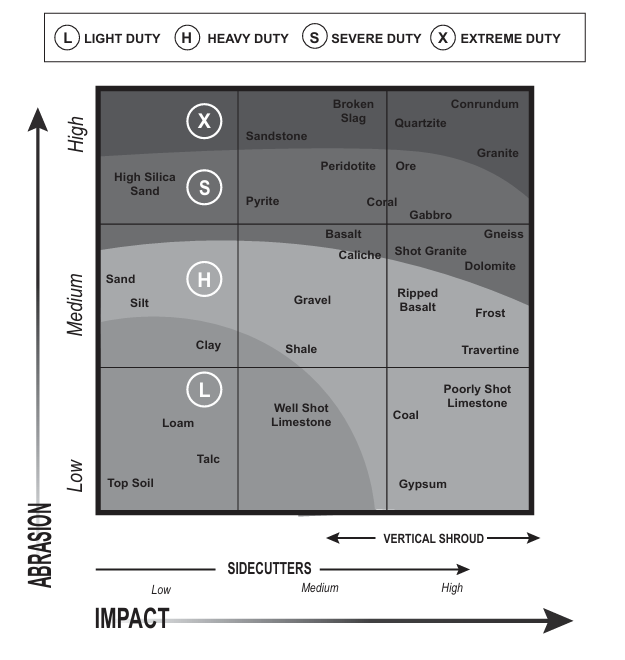
Not sure what bucket is right for you? Check out our full bucket selector chart.
3. Materials and Build Quality: Materials and build quality play a major role in bucket pricing because higher-grade steel, reinforced wear areas, accurate fitment, and sound engineering all add cost up front but help the bucket perform better and last longer. A well-built bucket is designed to maintain the right balance of strength, weight, and bucket geometry so it can handle the application efficiently without creating unnecessary wear, lost productivity, or premature failure. At Werk-Brau, that focus is backed by an in-house engineering team that designs buckets around real application demands, machine compatibility, and long-term durability. A well-engineered bucket typically costs more because the value is not just in the steel, but also in the design time, structural analysis, fitment accuracy, and performance optimization built into it from the start.
4. Brand, New vs. Used, and Condition: Brand, new versus used status, and overall condition all play a role in bucket pricing. OEM buckets from manufacturers typically carry a premium, while aftermarket or used options can cost significantly less. However, the actual value of a used bucket depends heavily on wear, hours, maintenance history, and how much usable life is left in the attachment.
5. Compatibility and Features: Compatibility and added features can have a noticeable impact on bucket pricing because the attachment has to match the machine correctly and perform the way the application demands. Pin-on buckets are often more straightforward, while quick coupler setups, machine-specific interfaces, custom widths, and accurate pin center requirements can add cost through additional design and fitment work. Features such as bolt-on edges, spill guards, teeth, and other wear components also affect price, with some edge options costing more than others based on material, thickness, design, and how much protection or serviceability they provide. If hydraulics or custom-built features are involved, the price typically increases further due to the added components, complexity, and engineering required.
6. Other:
Market Conditions: Market conditions can influence bucket pricing through factors such as steel costs, freight, and the availability of wear components sourced through global supply chains. Regional demand also plays a role, since bucket pricing can vary depending on market activity, machine population, and how strong demand is in a given area.
Dealer Margin: Dealer margin can also affect the final selling price, and it is not always the same from one deal to the next. A core dealer relationship may be priced at roughly 10–15%, while some dealer margins may be closer to 20–30% depending on factors such as attachment volume, financing, competitive pressure, and the overall structure of the sale.
So how do you choose the right wheel loader bucket? Werk-Brau's Recommendation
Bucket pricing can vary widely, but the best choice is not always the cheapest or the largest—it is the bucket that is properly matched to the wheel loader, the material being handled, and the demands of the job.
While upfront cost matters, long-term value often comes from durability, reduced maintenance, less downtime, better fitment, and the confidence that the attachment will perform as intended over time. In many cases, a higher-quality bucket carries a higher price because it is engineered to last longer, deliver more consistent performance, and support a lower total cost of ownership over its service life.
At Werk-Brau, that approach is built around engineering loader attachments for productivity, durability, and long-term customer success, not simply building a bucket to meet the lowest initial price point.
