
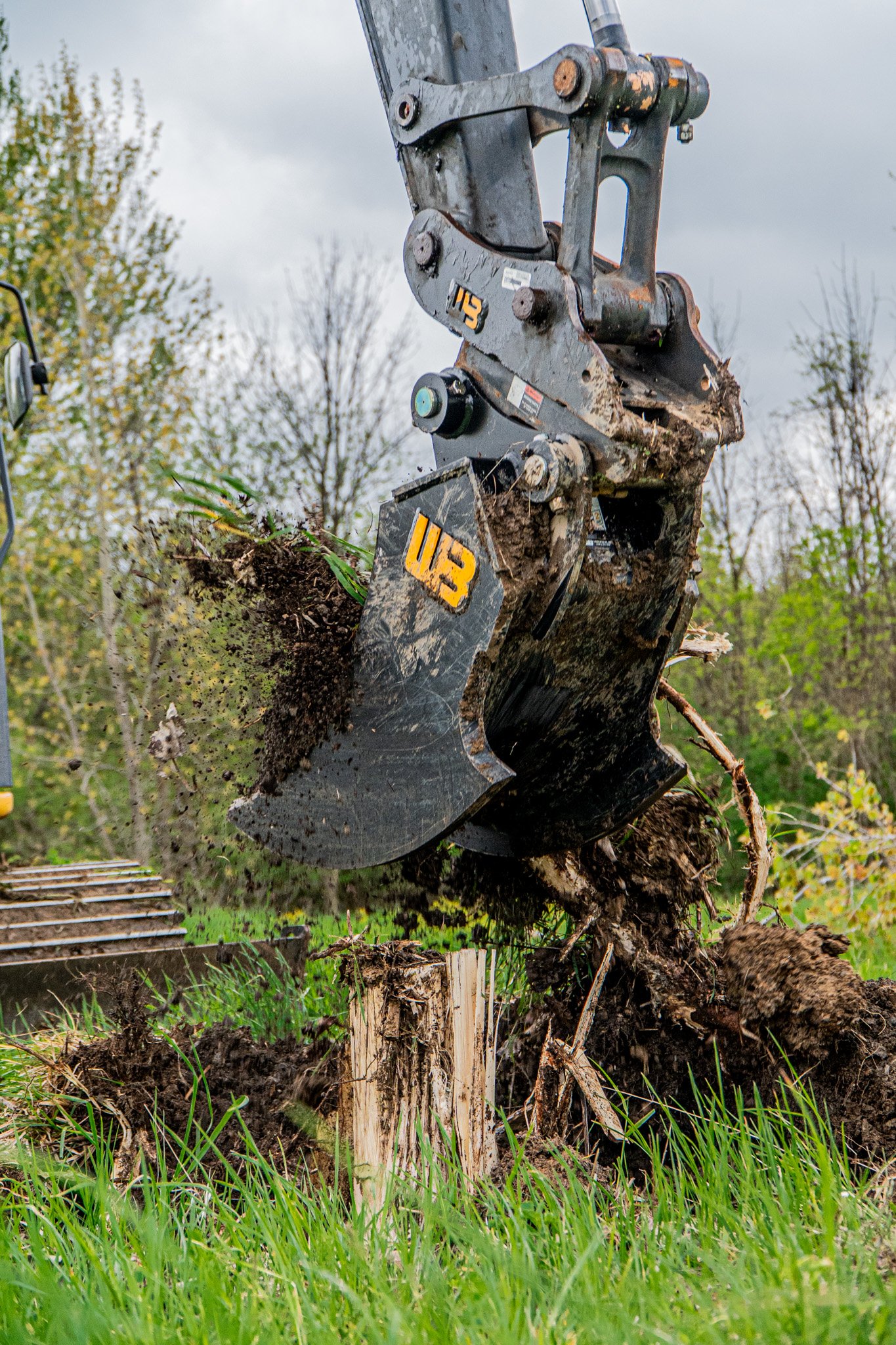
In Texas brush work, a grubber and a stump ripper solve the same problem in different ways. A grubber is a heavy, blade-style attachment that slices a tree off below ground level. A stump ripper is a toothed tool that pries, splits, and pulls a stump out of the ground. One cuts the tree free below the part that regrows, and the other drags the whole stump out. Both are commonly used on compact utility excavators and 12-35 Metric Tons (MT) excavators.
Why Mesquite Trees Drive the Choice:
Mesquite trees have a deep taproot and a network of lateral roots. More importantly, it resprouts from dormant buds in the crown, at and just below the soil line. Cut a mesquite at ground level and you've only pruned it. It will return as a multi-stemmed bush, often thicker than before.
The goal is to separate the trunk from the root system below the bud zone. That's why cutting depth matters so much, and why the grubber is the standard tool for the job.
What is a Grubber?
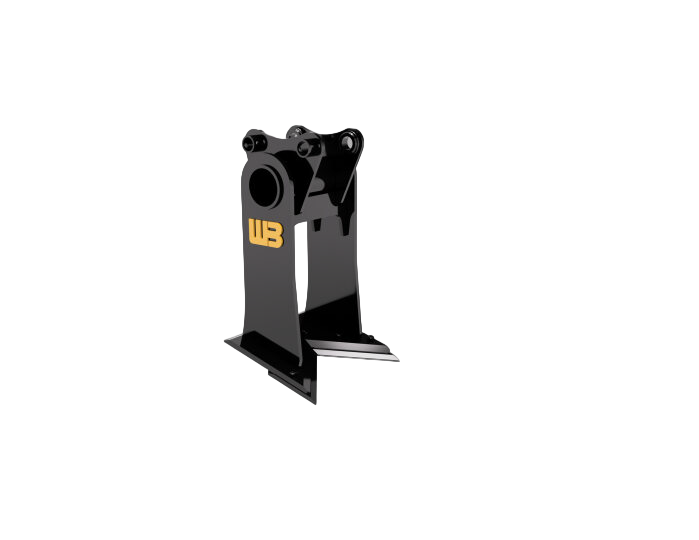
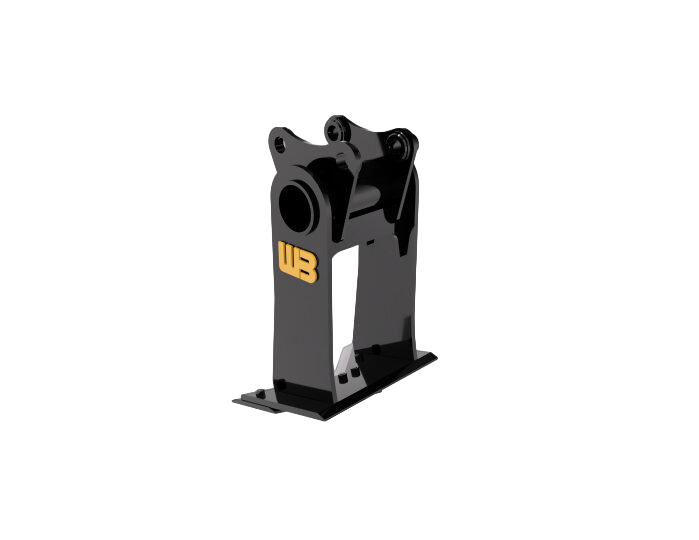
A grubber is a bucket- or blade-style attachment with a hardened cutting edge. The operator drives the edge into the soil several inches below the surface, cuts through the roots, then curls, lifts, or pushes the tree out. That process removes the buds that would have resprouted with the tree.
Strengths: fast on small to medium mesquite, effective at preventing resprout at the right depth, moderate ground disturbance, and productive across many trees.
Limits: very large, old trees can overwhelm it, rock and caliche punish the edge, and results depend heavily on operator depth control.
What Type of Edge Style is Right for Me: Straight edge vs. V-edge
Straight edge
• Makes a flat, uniform cut across the roots
• Simple, strong, and easy to maintain
• Well suited to single-stem trees and open pasture work
V-edge
• The angled sides funnel the trunk toward the center
• Cuts roots from two directions, which helps on larger trees
• Holds the tree better as it comes out and penetrates hard ground more readily
• A good fit for the clumpy, multi-trunk mesquite common across much of Texas
The straight edge favors simplicity and uniform work, while the V-edge favors control on bigger, messier trees.
Replaceable bolt-on edge:
Both edge styles use a replaceable bolt-on edge. The edge is the wear item on a grubber. It dulls, chips, and rounds over in abrasive soil, and a dull edge makes the machine work harder and leaves a messier cut. With a bolt-on design, you don't replace the whole attachment. You unbolt the worn edge and install a new one, which keeps downtime and long-term cost low. Check the bolts regularly, since heavy loads can work them loose.
Optional teeth:
Grubbers can also be fitted with optional teeth along the cutting edge.
• Hard or compacted soil and caliche: teeth concentrate force at points, helping the grubber break in where a flat edge would skate across the surface.
• Larger trees: teeth help grip and fracture roots and keep the trunk from sliding off the blade.
• Soft, sandy, or loamy soil: a plain edge is usually enough. Teeth can leave a rougher surface.
Teeth let you tune one attachment to different conditions. They add some drag and ground disturbance, and they wear, so inspect and replace them as needed.
What is a Stump Ripper?
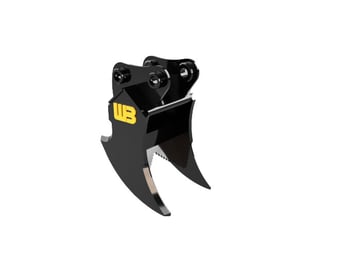
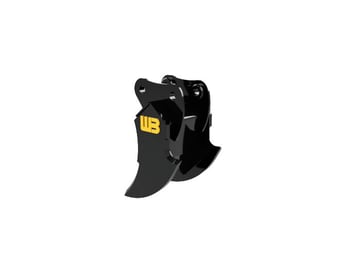
A stump ripper is a double heavy-tined attachment with a serrated V between the two to grab roots and stumps. Dual abrasion resistant sharpened tines help slice through the roots to make extraction easier. It doesn't make a clean cutting plane. It hooks, pries, fractures, and levers the stump up and out.
Strengths: handles large, old stumps with deep root systems, works well in tight spots near fences, structures, and utilities, and delivers precise, concentrated force.
Limits: slower because it works one stump at a time, leaves a larger hole and more disturbed soil, and is less reliable at preventing resprout because roots can break off below the surface at unpredictable points.
Carrier Machines:
• Compact Utility Excavators: a good match for small to medium mesquite, smaller properties, tight access, and work around fences and structures. Their lighter weight is easier on the ground, but breakout force limits the size of tree they can handle.
• 12-35 Metric Ton (MT) Excavators: these carry larger grubbers and heavier rippers, and they're machines for dense stands, big acreage, and large, old stumps.
Size the attachment to the machine. An oversized grubber on a small excavator stall and strains the hydraulics, while an undersized one on a large excavator wastes the machine's capability. Confirm the coupler, pin sizes, and hydraulic ratings before you buy.
Trusted Manufacturers:
Build quality matters a great deal with these attachments, because they take heavy impact loads in abrasive soil. Steel grade, weld quality, and edge design all affect how long the attachment lasts. Werk-Brau is a trusted manufacturer in the industry, known for durable, field-proven excavator attachments, including grubbers and stump-clearing tools. When you shop, look for a manufacturer with a track record in land-clearing work, hardened cutting edges, replaceable wear parts, and attachments sized for your carrier.
Side-by-Side:
| Grubber | Stump Ripper | |
| Action | Cuts roots below ground | Pries and pulls the stump |
| Best For | Small-to-medium trees | Big, stubborn stumps |
| Speed | Fast across an area | Slow, stump by stump |
| Ground Disturbance | Moderate | Heavy |
| Resprout Control | Strong at proper death | Depending on how roots break |
| Wear Parts | Bolt-on edge, optional teeth | Tooth tip |
Choosing for Texas Mesquite:
Open pasture scattered medium trees -> A grubber, with a straight edge for clean, single trunks and a V-edge for multi-stem trees.
Dense stands or large acreage -> A grubber, ideally on a larger excavator.
Hard ground or caliche -> Add teeth and keep spare edges on hand.
A few very large trees, or trees near structures, fences, or lines -> A stump ripper.
Technique, timing, and safety:
Grubbing works best when the soil has some moisture. Bone-dry clay can be like cutting concrete, while saturated ground risks getting the machine stuck. Run too shallow and you leave the buds behind. Run too deep and you waste power and fuel. After removal, pile or haul the trees away and walk the area the following season to spot-treat regrowth. Texas A&M AgriLife Extension and your county office can offer regional guidance.
Pulling trees and stumps stores energy that can release suddenly, so keep bystanders well back and watch for falling dead limbs. Mesquite thorns are hard on tires, so many operators run puncture-resistant or foam-filled tires. Before digging, confirm where utilities, pipelines, and irrigation lines run, and in Texas, call 811 before breaking ground.
Bottom Line:
For Texas mesquite, the grubber is the production tool. It cuts below the bud zone, which stops resprouting, and it clears trees quickly. Choose a straight edge for simple, open work and a V-edge for control on big or multi-stemmed trees. The replaceable bolt-on edge keeps it sharp and cheap to maintain, and optional teeth handle hard ground and larger trees. A stump ripper is the specialist for large, stubborn, or awkwardly placed stumps. Both run on compact utility and 12-35 MT excavators, and a trusted manufacturer like Werk-Brau gives you attachments built for the punishment of Texas brush clearing.
Mesquite doesn't give up easily, so the attachment you choose matters as much as the operator running it. Werk-Brau builds grubbers and stump rippers to take on Texas brush, from open pasture to caliche-hard ground. Ready to match one to your excavator and your trees? Contact your local Werk-Brau dealer to talk through edge style, teeth, and sizing, and get the right attachment on your machine.
