
Excavator Grapple Bucket vs Box Grapple vs Bucket and Thumb: Where Each One Thrives
November 6th, 2026
4 min. read
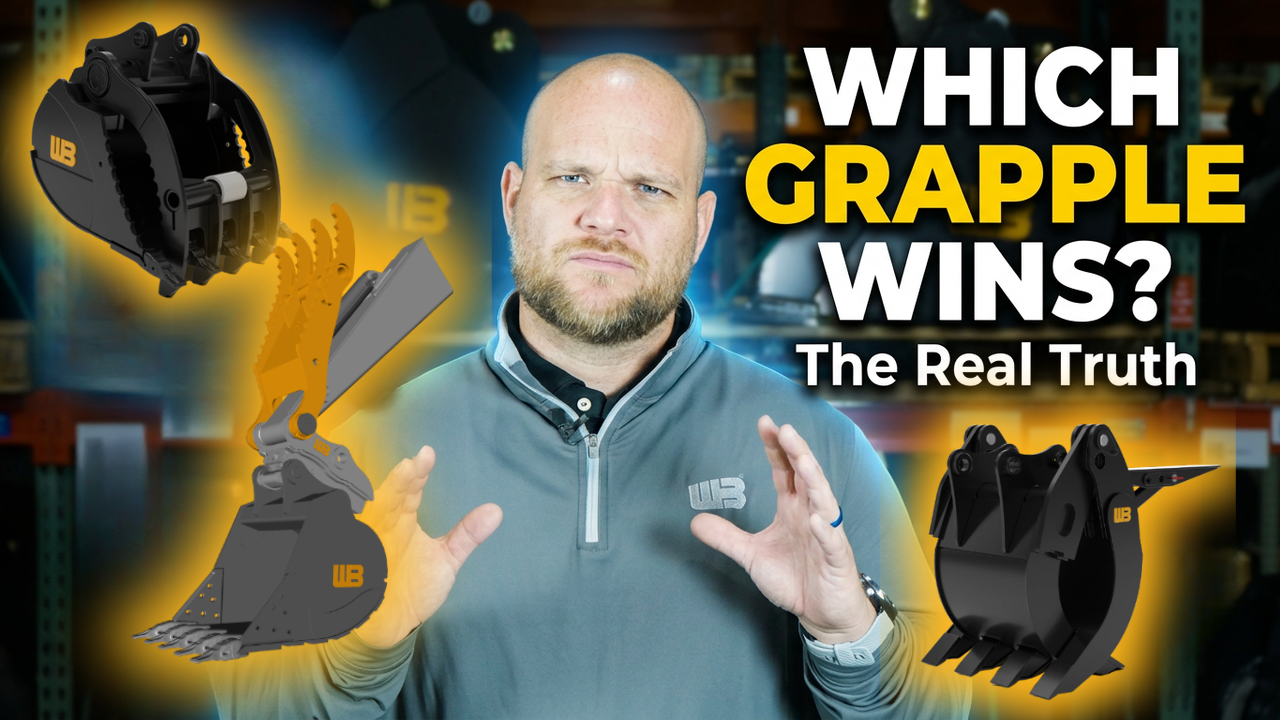
Grapple Bucket vs Box Grapple vs Bucket and Thumb: comparison for excavators focused on digging, sorting and material handling.
Grapple bucket combines scooping with hydraulic clamping for brush, loose debris, small stumps and cleanup piles. Box grapple focuses on grabbing and sorting bulky material with no digging function. Bucket and thumb retains full digging ability with added control for picking, placing and holding.
A 70/30 guideline helps selection. Mostly digging favors bucket and thumb. Mostly bulky debris handling favors box grapple. Mixed cleanup, scooping and truck loading favors grapple bucket. Not ideal for clean trenching with no handling needs, where added weight and maintenance add no benefit.
FAQ: What is the difference between a grapple bucket and a box grapple? A grapple bucket scoops and clamps loose material, while a box grapple grabs and sorts bulky material without digging.
When does a bucket and thumb make sense? A bucket and thumb fits operations digging most of the time with occasional picking and placing.
What to check before buying an excavator grapple? Common material type, need for digging, debris size and frequency of task changes.
TRANSCRIPT:
If you're trying to decide between a grapple bucket, a box grapple, or a bucket and a thumb, here's the simple truth. They can all move material, but they don't all solve the same problem. So in this video, we'll talk through which one actually makes sense for the work that you're doing before you spend money on the wrong thing.
If you've been around excavators for any length of time, you've probably heard people throw around terms like grapple bucket, box grapple, a bucket, and thumb like they're all basically the same thing. Well, they're actually not. They all help you move and control material, but they're built for different kinds of work. And if you pick the wrong one, it can make a good excavator feel like it's fighting you all day.
First question is, what are you actually trying to do with the machine? Are you digging or sorting? Are you loading brush or picking up concrete? The answer to these types of questions will decide which of the three attachments makes the most sense for you.
A grapple bucket is useful when your work changes throughout the day. You still have a bucket body so you can scoop, carry, and move loose material, but you also have hydraulic clamping ability as well. That means you can grab brush, loose debris, smaller stumps, demo material, or irregular clean up piles instead of trying to balance everything in a standard bucket.
Think about a contractor cleaning up after a site prep job. One minute they're picking up brush and roots, and the next they're scooping up loose dirt or loading mixed material. That's where a grapple bucket makes a lot of sense. It gives you versatility. It's not always the most specialized tool, but it gives you a lot of function. And one attachment.
A box style grapple is a different animal. A box grapple is more of a grab and sort attachment. It's built for bulky, irregular material where clamping and holding is really the main job. Brush piles, stumps, scrap, recycling, demolition debris, storm cleanup, and land clearing material are all good examples.
The big thing to remember is that a box grapple is not a digging bucket. If the plan is to trench, pry, or dig hard with it, you're looking at the wrong attachment. It can be a very productive tool when the job is grabbing, sorting, loading, and feeding material, but it's not meant to replace a digging bucket.
Then there is the bucket and thumb set up, which is probably the most familiar option for a lot of contractors. The bucket does the digging. The thumb gives you control when you need to pick, place, sort, and hold material. This setup is hard to beat when an excavator still needs to dig most of the time, but also needs to occasionally handle objects. If your operator is digging out stumps, placing rocks, grabbing limbs, handling pipe, or cleaning up around a trench, a bucket and a thumb give a lot of flexibility without giving up the digging performance of a typical bucket.
But the thumb has to be matched properly. Thumb length, tine spacing, rotation, and how it works with the bucket all matter. A thumb that does not match the bucket can leave the operator with one good clamping position, and a lot of frustration everywhere else.
So here is a practical way to separate the three. If you need to scoop and clamp, a grapple bucket may be the answer. If you're mostly grabbing and sorting bulky material, a box style grapple is probably a better fit. If you need to dig first and handle material second, a bucket and thumb is usually the safest bet. another way to think about this, is the percentage of time that you're going to be doing each task. If the machine is digging 70% of the time and grabbing 30, the bucket and thumb deserve a closer look.
If handling brush, scrap or demolition debris most of the day, box style grapples start to make more sense. If the job keeps switching between cleanup, scooping, clamping, and truck loading, the grapple bucket may be the most practical middle ground.
The mistake is buying based only on appearance. A more aggressive looking attachment is not always the more productive attachment. The right answer depends on the material, machine size, coupler set up, the operator's work cycle, and what the attachment is expected to survive every day.
So before buying, ask a few simple questions. What material am I handling most often? Do I need to dig with this attachment? Am I sorting bulky debris or am I scooping loose material? How often will the machine switch tasks? Do I need a more versatile tool? Or do I need a specialized tool that does one job really well?
The wrong attachment might still work, but it may work slower, wear faster, frustrate the operator, or cost you production. The right attachments should make the machine feel more useful, not more complicated.
If you're not sure which setup fits your excavator and your application, tell us what machine you're running and what material you're handling. We'll help you narrow it down without guessing.
