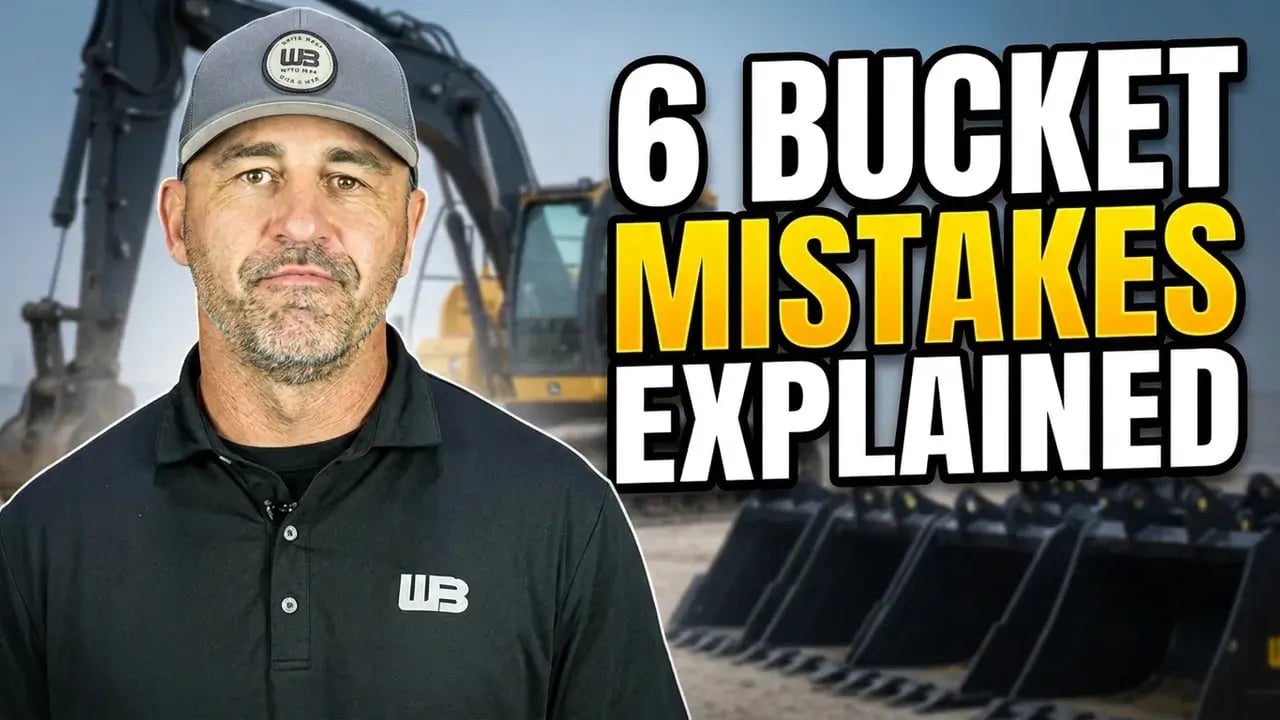
Your attachment choice shapes uptime, operating cost and machine life on every job. This guide explains six mistakes contractors make before and after purchase.
If you are unsure which tool fits your job, talk to your local Werk-Brau dealer for sizing help.
FAQ: What are the biggest mistakes before buying an attachment? Shopping price alone, assuming fit means function, and skipping application details.
What are the biggest mistakes after buying an attachment? Skipping inspections, using the tool for the wrong job, and forgetting operator training.
How do you choose the right excavator or loader attachment? You match machine class, coupler style, lift capacity and material to the work you do daily.
Welcome back to Werk-Brau, I'm Chad Christiansen, and in this video we're going to talk about the worst mistakes customers make before and after they buy an attachment.
The first mistake people make is purely buying on price alone. We get it. Everybody has a budget. Nobody wakes up in the morning and says, let's spend extra money today. But when you buy an attachment, the purchase price is only part of the story.
A cheaper attachment may look fine on the quote, but if it wears faster, cracks sooner or doesn't fit correctly, that low price can turn into a very expensive lesson. You need to find out how long the attachment should last, w hat wear protection is included and whether it is actually engineered in the work you're doing.
The cheapest upfront attachment is not always the least expensive in the long run.
The second mistake is assuming that if it fits, it works. That is really dangerous thinking. Just because an attachment can physically hook up to the machine doesn't mean that it's the right attachment for the machine.
With attachments, you need to think about the machine class, coupler style, lift capacity, breakout force, and the application itself. A bucket that is too wide, too heavy or built for the wrong application can reduce the performance and put extra stress on the machine.
The better move is to match the attachment to the job. A properly matched attachment helps the machine work efficiently, safely, and productively. The wrong choice can make even a great machine feel like it's wearing shoes that are two sizes too big,
The third mistake is buying an attachment based on what it is called instead of what it's going to do every day. I need a bucket is a start, but it's not enough. What kind of bucket? For what material? How many hours? What is the operator trying to accomplish?
Attachments are not a one size fits all. A heavy duty bucket, severe duty bucket, rake, grapple all solve different problems. If you're loading mulch, you wouldn't need to use the same bucket you use for shot rock. If you're cleaning ditches, you don't need to use the same bucket you use for praying frost or shale.
The better question is not what attachment do I need. It is what problem am I trying to solve? Once you answer that, the right attachment gets a lot easier to find.
The first mistake people make after purchase is treating the attachment like it's indestructible. Attachments are tough, but they're not magic. Even the best made attachments need regular checks.
Whether you're running an excavator bucket or a wheel loader attachment, make regular inspections part of your routine. Always be sure to check the teeth cutting edges, side cutters, side plates, heel plates, welds, pins, bushings, hydraulic lines, cylinders, wear points, and any cracking or unusual wear on the buckets. A two minute walk around can prevent a very expensive surprise.
The second mistake is using the attachment outside of its intended purpose. This one happens all the time. A bucket becomes a pry bar. Forks become a digging tool. A light duty attachment gets thrown into a severe duty application, and everybody acts surprised when it breaks.
Attachments are engineered around specific forces and applications. A ditching bucket is great for grading and cleaning, but it's not built for rock. A light material bucket is great for mulch, snow, or loose material, but it's not the right tool for dense, abrasive material.
The better approach is simple. Use the attachment for what it's designed to do. The job changes the attachment may need to change too. That's not picky. That's protecting the machine, attachment, operator and schedule.
The third mistake after purchase is forgetting the operator matters. You can buy the right attachment, match it to the machine, and spec it for the job, but if the operator does not understand what it's meant to be used for, you're leaving performance on the table.
For excavators, proper technique effects digging efficiency, tooth wear, thumb and coupler wear, and how much stress is put on the stick and boom. For wheel loaders, operator technique effects bucket fill, break out force, cycle times, visibility and machine stability.
Please do not ignore the operator feedback. If something feels off, it's best to investigate early before it becomes a big problem. The better move is to train the operator, review the attachment manual, inspect the setup and listen to what the operator says is the problem.
Most attachment problems do not start with a bad attachment. They usually start with a bad match, bad assumption or a lack of follow through after the purchase.
Before you buy, don't shop by price alone. Don't assume fit equals function, and don't skip the application details. After you buy, inspect it, maintain it, use it for the right job and make sure the operator knows how to get the most out of it.
If you're not sure which attachment makes the most sense for your job, that's where we can help. Talk to your local Werk-Brau dealer or reach out to us. We're happy to help you find the right tool before you spend the money.