
Why a Bigger Wheel Loader Bucket Can Slow You Down
September 18th, 2026
3 min. read
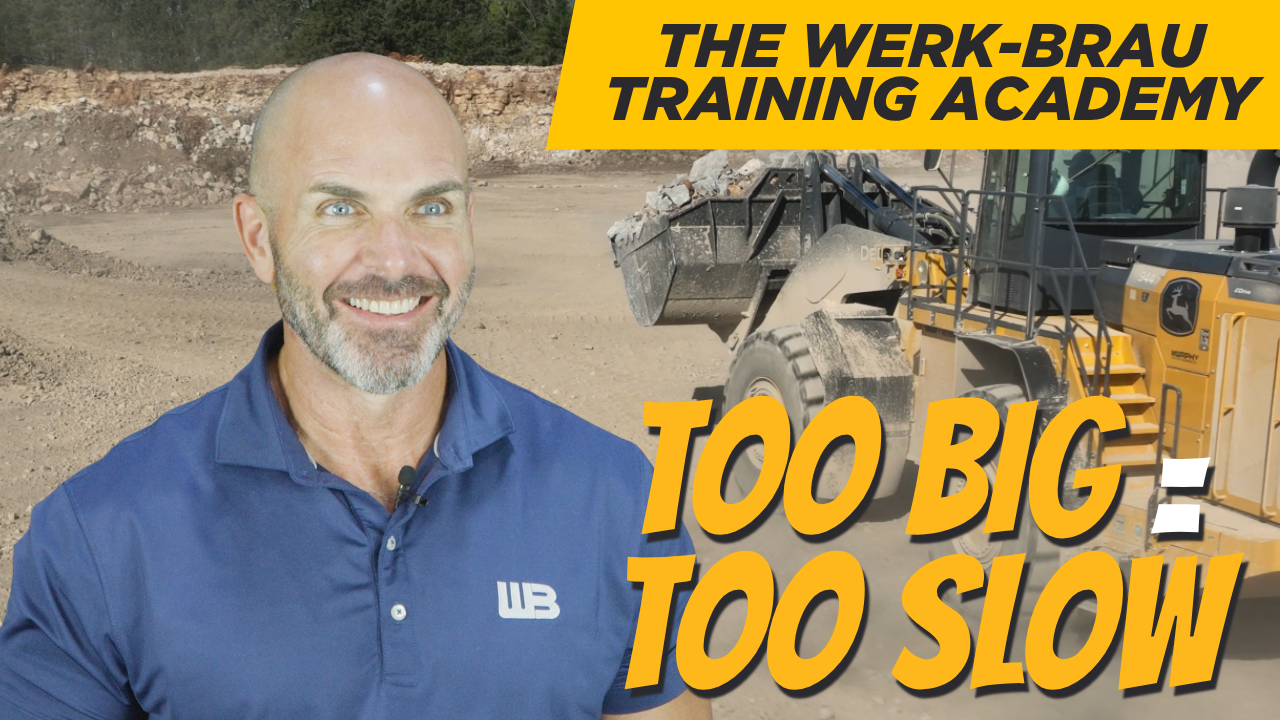
Bigger buckets look productive on paper. This guide explains why an oversized wheel loader bucket can reduce output and increase operating costs.
This video covers:
- Why oversized buckets struggle to fill and leave you with half loads
- Rated operating capacity and tipping load with light vs dense material
- Hydraulic stress on pumps, cylinders, hoses, and seals
- Why cycle times get slower with tire spin and instability
- Tire, edge, and wear plate costs plus downtime from overloading
- How to pick size by machine specs, material, and job type
CHAPTERS:
0:00 INTRO
00:29 Problem 1: Breaking Traction
00:55 Problem 2: Over Capacity
01:46 Problem 3: Hydraulic Stress
02:15 Problem 4: Slower Cycle Times
02:42 Problem 5: Increased Wear & Costs
03:18 How to Pick the Right Sized Bucket
FAQ: What happens when a wheel loader bucket is too big? You get poor fill, instability, slower cycles, hydraulic strain, and faster wear. How do you choose the right wheel loader bucket size? You match rated capacity and tipping load to material density and application. When does a high-volume bucket make sense? You benefit most in light material like mulch or snow when the machine is sized correctly.
Bigger buckets look awesome. There's no denying it. But putting an oversize bucket on a wheel loader can actually make the machine less productive, harder to operate, and more expensive to maintain and in some situations less safe.
So today we're talking about oversized loader buckets. Why they're tempting why they can cause problems and how to think about bucket size the right way before you bolt on the biggest thing you can find a wheel loader fills the bucket by driving into the pile using the machine's weight and power and traction to push through the material. If the bucket is too large, you are asking the loader to push more resistance than it can realistically handle.
And here is the frustrating part. After all that effort, you may still end up with a half filled bucket. More capacity on paper does not help if the machine cannot consistently fill in a real working condition. The second issue is rated operating capacity. Every wheel loader has its limits. And one of the biggest ones is tipping load. When the bucket is too large, even a partial load can become too heavy depending on the material.
Mulch, snow and light material behave very differently than wet sand, stone or clay. A bucket that seems reasonable in light material can become problematic when the material gets dense.
The extra load does not just affect the bucket, it puts more stress on the entire machine. And if the operator is carrying that load too high, turning too fast, or working on uneven ground, the risk goes up quickly.
This is where we need to be serious for a second. Bucket sizing is not just a productivity conversation, it is a safety conversation. The goal is to not see how much material you can possibly lift at one time. The goal is to move materials safely, consistently and profitably all day.
The third problem is hydraulic stress. Your loaders hydraulic system is designed around the machine's rated capacity. When you overload the bucket, the machine has to work harder through lift cycles. That can mean more heat strain on the pumps, cylinders, hoses and seals, and a shorter service life for components that are not cheap to repair.
A properly sized bucket helps the loader stay in its efficient working range. The machine lifts, rolls back, carries, dumps, and resets the way it was intended to.
The whole reason people want a bigger bucket is usually simple. Fewer passes, and that makes sense. If one scoop is bigger, you should move material faster, right?
Not always. If the bucket causes tire spin, makes the machine unstable, slows the lift cycle, or forces the operator to be more cautious. Your cycle time can actually get worse. That means the operator may be moving less material per hour. Even though the bucket is technically larger.
The fifth issue is wear. An oversize bucket can increase stress on the loader and the attachment tires can wear faster from extra spin cutting edges, and wear plates can take more abuse more fuel, maintenance, downtime and repairs.
To top it off, that is before you count the lost production when the machine is sitting still instead of loading trucks.
At the end of the day, the goal is not the biggest bucket. The goal is the best cost per yard, ton or hour.
A bucket that is properly matched to the loader material and application will usually beat an oversize bucket that looks great, but makes the machine fight itself.
So how do you pick the right size? Start with the machine.
Look at the loaders rated operating capacity, tipping load, hydraulic capability, coupler style and manufacturer recommendations. Then look at the material. Is it light and fluffy like mulch or snow or dense and heavy like wet sand? Then look at the job. Are you loading trucks? Stockpiling, feeding a plant, clearing snow, handling aggregates? A good bucket match should help the operator fill the bucket efficiently, keep the machine stable, maintain strong cycle times, reduce unnecessary wear and move materials safely throughout the day bigger buckets have their place.
High capacity buckets are great when the material is light enough, the machine is sized correctly and the application calls for volume.
The best loader bucket is not the biggest bucket you can attach. It is the bucket that lets the machine do its job well cycle after cycle without beating up the loader,
If you're not sure what loader bucket size makes sense for your machine material and application, talk to your local Werk-Brau dealer or reach out to the Werk-Brau team. We will help you match the right bucket to the job so you can move more material.
