
4 Reasons Why Excavator Buckets Fail Early: Wear Parts, Fitment and Application Mistakes
November 13th, 2026
4 min. read
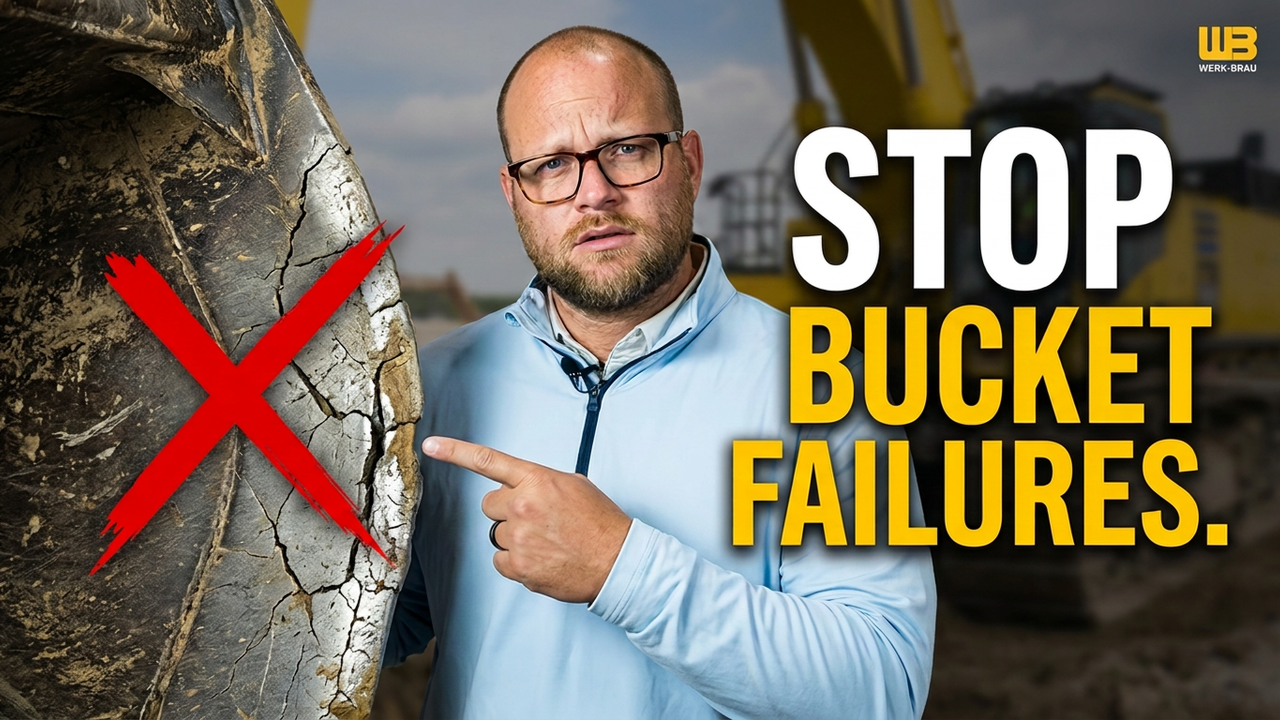
In this video, Mike from Werk-Brau breaks down 4 common excavator bucket problems that lead to costly repairs and downtime.
You'll learn how to spot excessive wear early, verify fitment, match the bucket to your application and build a simple inspection routine that extends bucket life. This video is built for contractors, equipment managers and operators who want more life from their buckets without guesswork on the jobsite.
What you will learn:
- How wear on teeth, cutting edges and side plates spreads to the bucket shell
- Why proper fitment between bucket, coupler and machine protects pins and bushings
- How to match the bucket to your machine, material and digging conditions
- When an overbuilt bucket adds weight, slows cycle times and hurts efficiency
- What to check during routine inspections, including weld areas and side cutters
- Why operator feedback catches loose fit and cutting issues early
- When you do NOT need a new bucket yet and a wear-part replacement is enough
FAQ
What causes an excavator bucket to wear out fast? Continuous digging with worn teeth and cutting edges transfers stress to the shell and side plates, which turns affordable wear-part replacement into shell repair.
How do you choose the right excavator bucket? Match the bucket to your machine size, pin dimensions, material density and digging conditions, then confirm it is built for the way you will actually use it.
What is excavator bucket fitment? Fitment is the precise match between bucket pins, bushings and coupler dimensions. Poor fit creates looseness and instability and accelerates wear across the bucket and machine.
When should you replace bucket teeth? Replace teeth and cutting edges before they reach failure point. It is much more affordable to replace wear parts than to repair or replace the bucket.
How do you extend excavator bucket lifespan? Inspect teeth, cutting edges, pins, bushings, side cutters and weld zones on a routine basis and address small issues early with operator input.
TRANSCRIPT:
Welcome back to Werk-Brau, I'm Mike Noward, and in this video we'll go over four common excavator bucket problems and how you could avoid them in the future.
Excavator buckets have a rough job. They get dragged through abrasive material and slapped into hard ground, then expected to show up and do it all over again tomorrow. So, yes, wear is normal, but a lot of expensive bucket issues give you warning signs before they turn into major repairs. Here are some of those signs.
You usually see excessive wear on teeth, cutting edges, side plates and other high contact areas. At first it may not seem like a big deal. The bucket still works and the machine still digs.
But if that wear keeps on going, eventually the damage moves past the wear parts and into the structure of the bucket. Now you're not just replacing teeth or an edge. You may be repairing the shell, rebuilding areas that should have been protected, or replacing the bucket sooner than expected.
So make sure you're routinely checking your wear parts and replacing them before they reach that point of failure. It's much more affordable to replace the wear parts than to repair or replace the bucket.
If the bucket doesn't match the machine coupler or pin dimensions properly, it can feel loose, sloppy, or unstable. That movement is not just annoying for the operator. It can speed up wear on the bucket, the pins, bushings, the coupler, and even the machine.
Fitment matters because that is the connection where all the force moves from the excavator into the ground. If that connection isn't right, everything downstream works harder, which causes more wear on everything.
So it's important to always double check measurements before ordering your bucket. If it doesn't fit well when it arrives, don't force it or make it work. The cost of damage caused by that will outweigh the cost of your downtime.
This one happens all the time. A contractor buys a bucket that makes sense originally, but then the application changes.
Maybe it was supposed to be lighter digging and now it's working in rock. Maybe it's supposed to be occasional use and now it's running hard every day. A lighter duty bucket should not be asked to live like a severe duty rock bucket. At the same time, the heaviest bucket is not automatically the best bucket.
If the bucket is overbuilt for the machine or application, it can add unnecessary weight, reduce payload, slow cycle times, and hurt efficiency. The right bucket is not always the biggest or the heaviest bucket. It's the bucket that matches the machine, the material, the digging conditions, and the way the operator is going to use it.
Before buying your bucket, always think through your application and any possible road bumps or changes of plans that could potentially arise and make sure you have a game plan for those too.
You've heard us say this time and time again and that's because we truly believe it's the easiest thing to overlook.
Teeth, cutting edges, pins, bushings, side cutters, weld areas, and weld zones are all things that should be checked regularly. Small problems are always cheaper and easier to fix when you catch them early. Waiting until the bucket is obviously failing usually means that the repair is bigger, the downtime is longer, and the frustration is higher. Your operators can help a lot here.
They know when the bucket feels loose. They notice when it's not cutting like it used to and when the teeth are worn down or something just doesn't sound right. So always ask your operators if anything feels off and listen to what they have to say about it.
So what should you do? Inspect the bucket before problems become obvious, replace wear parts before wear gets into the structure, make sure the bucket, coupler and machine are compatible and match the bucket to the application instead of just buying based on price or availability. And finally, listen to your operator. If they say the bucket feels sloppy, slow, or wrong for the material, there's probably a reason.
The big takeaway is simple do not wait until the bucket fails to start paying attention.
And when you're buying, do you not just ask what does it cost? Ask, is this built for the way I'm actually going to use it? That question can save a lot of headaches later.
Thanks so much for watching. If you found this helpful, be sure to subscribe for more content just like this. We'll see you in the next one!
Topics:
