
Excavator Demolition Attachments Guide: Heavy vs Severe vs Extreme Duty Buckets, Thumbs and Grapples
November 20th, 2026
4 min. read
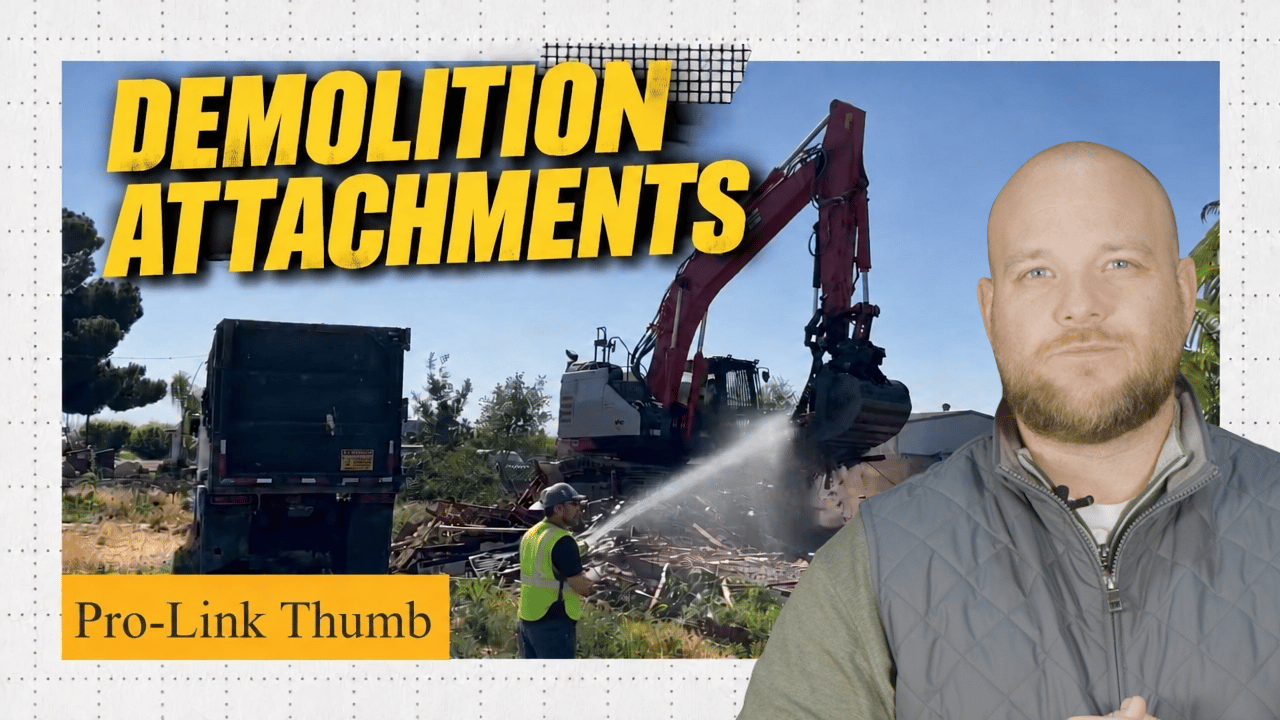
Matching Excavator demolition attachments to material type and daily tasks prevents costly overbuilding and jobsite slowdowns. This guide from Werk-Brau compares Heavy Duty, Severe Duty and Extreme Duty buckets alongside hydraulic thumb configurations, rakes, grapples and integrated options like hydraGrip.
TRANSCRIPT:
The most expensive attachment mistake in demolition is not always buying something that is under built. Sometimes it's buying an attachment that doesn't match what the excavator spends most of its day doing.
In this video, I'll show you how to choose between heavy, severe, extreme duty buckets, three common thumb configurations, rakes, grapples, and an integrated option as well.
Before you look at a model number or ask for a price, answer these five questions. First of all, what material are you handling? Are you processing concrete, structural steel, wood, pipe, mixed debris or a little bit of everything? Second, has the material already been reduced by a hammer, a shear or a pulverizer?
Third on our list is going to be what will the excavator do most often? Are you going to dig, grab, sort or load?
Fourth, how frequently will you change buckets or attachments?
And fifth, where does the operator need to control the material? Is it close to the machine? Is it at full reach or throughout the entire bucket cycle?
Those five questions connect the needs of everyone involved.
Here is where the decision starts. If the material is already processed and the machine is mainly loading, begin with a bucket. But remember, the heaviest bucket is not automatically the best bucket.
Picture an excavator bucket loading concrete that has already been sized by a processor. In that application, a heavy duty bucket, may give you the best balance of usable capacity, cycle speed, and durability.
Now, if we move into a sharper material, more abrasion or tougher cleanup, a severe duty bucket starts to make sense. The added reinforcement protects the areas taking more abuse without automatically jumping to the heaviest option.
An extreme duty bucket is built for the harshest conditions. Larger chunks, aggressive handling, high wear, and repeated impact. That protection can be valuable, but it comes with a real trade off. More steel means more attachment weight. More attachment weight can mean less material, in every pass.
If the bucket is overbuilt for the work, you may gain protection you don't need while giving up payload and speed all day long. So use this as a general rule of thumb. Processed debris and loading, Start with a heavy duty bucket. With higher impact and abrasion, Consider severe duty. if you've got harsh, aggressive demolition cleanup, evaluate the extreme duty bucket.
Buckets are straightforward. Thumb selection is where compatibility and working range can quickly become more complicated. The proper thumb lets the excavator dig and load, then secure irregular material when the job calls for it.
The question you should be asking is how the thumb needs to work with the bucket. A stick mounted, universal style thumb fits, contractors who value flexibility, use multiple buckets or want a practical option on a machine without a coupler.
It adds grabbing capability without tying the set up as closely to just one bucket. The trade off, however, is a less optimized bucket match and less consistent control throughout the working range.
A main pin hydraulic thumb creates more integrated relationship between the thumb and the bucket. For regular picking, placing, sorting, and loading that match geometry can feel more predictable to the operator.
But if you frequently change bucket configurations, it offers less flexibility than a universal style thumb.
A progressive link thumb is worth considering when the operator needs to maintain a secure grip as the bucket moves through its entire arc.
Think about a tight site where the operator grabs material at reach, brings it closer, and places it without repeatedly resetting the machine. That added rotation can improve the workflow.
It also adds weight, complexity and cost. If grabbing is occasional, the added capability may not pay for itself.
Ask the operator this: Does a setup need to hold material securely only in a limited position or throughout the bucket's working range.
The answer will tell you more than a featured list. But what if digging is not the priority at all? That is where rakes and grapples separate themselves.
If the excavator is separating large debris from dirt stone and fines, a rake may be the most efficient choice. It gathers the larger material while letting the smaller material fall right on through. That can reduce unnecessary haul off and make sorting much faster.
A box style grapple is a dedicated grabbing and sorting tool. It makes sense when the machine spends most of its day handling bulky, irregular materials. The operator gets strong control without relying on a separate thumb.
Here's what you give up. A grapple is not as efficient for digging or high volume bucket loading. If the machine needs to do all three throughout the day, a dedicated grapple may solve one task while creating another attachment change.
That brings us to the Werk-Brau hydraGrip. It combines a reinforced skeleton bucket with clamping, sifting, and gripping capability through the machine's reach. If the operator regularly loads, grabs swords, and sifts on the same job, an integrated set up may reduce tool changes and machine repositioning.
But if 80% of the day is straightforward loading, that extra capability may not return enough value. The HydraGrip makes the most sense when those functions are part of your normal workflow, not when they happen just once in a while.
That is the test for any all in one attachment. Will the crew use the combined capability every day, or are they paying for functions that rarely get used?
If the material is already processed and the excavator is primarily loading, start with the right bucket duty level.
If the machine still needs to dig and load, but also secure irregular material, compare the three thumb configurations based on bucket compatibility and required working range.
If separating larger debris from fines is the primary task, look at a rake.
If grabbing and sorting bulky material is the machine's main job, look at a grapple. And if the excavator regularly needs to load, grab, clamp and sift without changing tools, evaluate an integrated attachment.
One mixed use example makes this clear.
If the machine breaks and cleans the material in the morning, sorts mixed debris after lunch and loads trucks at the end of the day, versatility may be worth more than the maximum performance, and any one task
Buy for what the excavator does most often, then make sure the setup can handle the exceptions without slowing down the entire site.
If this video is useful, give us a like, comment and subscribe to the Werk-Brau YouTube channel for more straightforward attachment comparisons and jobsite advice. I'm Mike Noward with Werk-Brau, thanks again for watching and we'll see you on the next one.
